Vicarious Nostalgia — saudade, mono no aware, and the words we don't have
Vicarious Nostalgia isn't a vaporwave aesthetic: saudade, mono no aware, viraha, huaigu. The words each culture gave to the nostalgia for what one hasn't lived.
WRITINGS
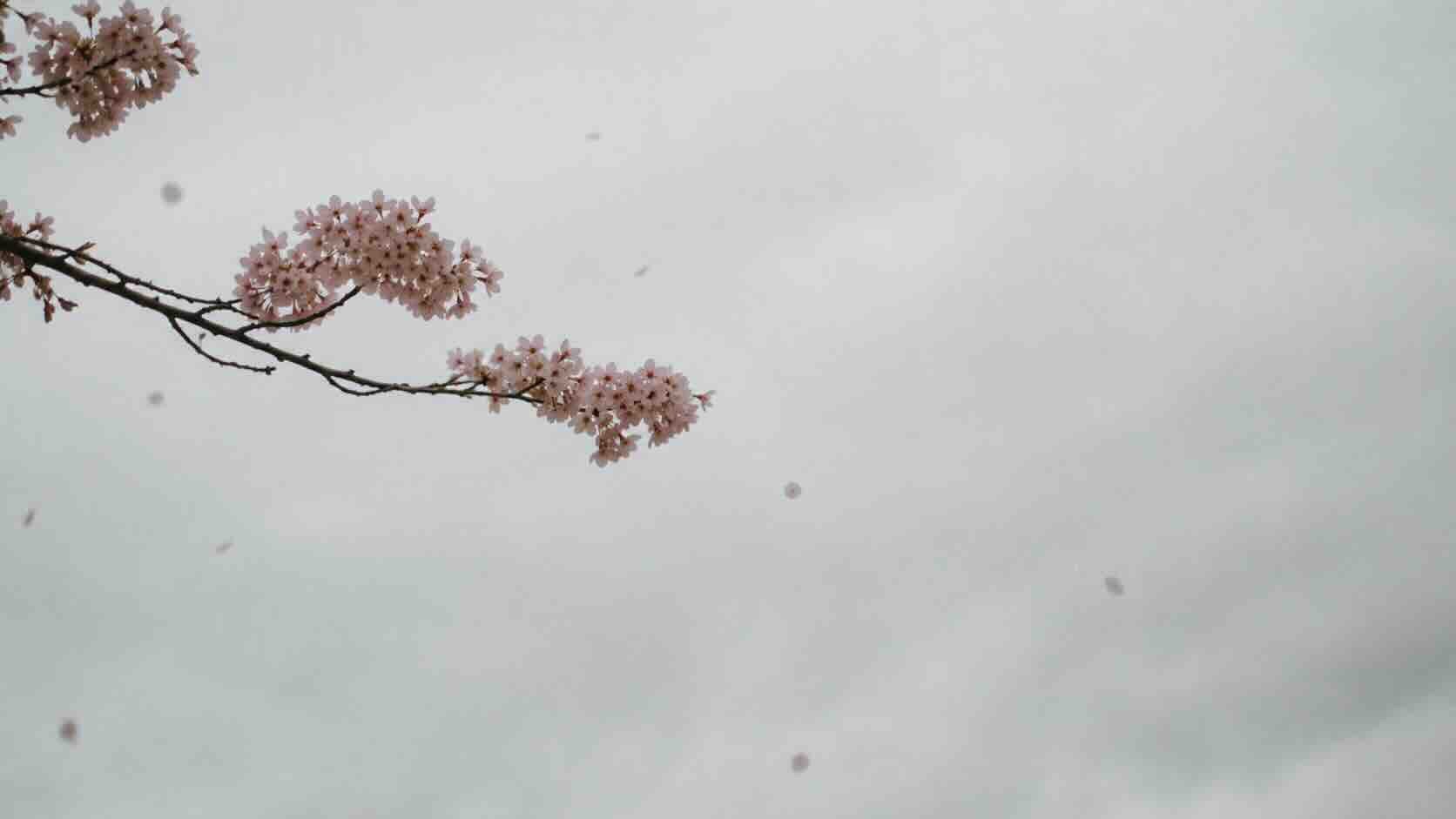
The English discovered anemoia inside an Eighties shopping mall. Japan, Portugal and China had known it for centuries — and had already given it a name.
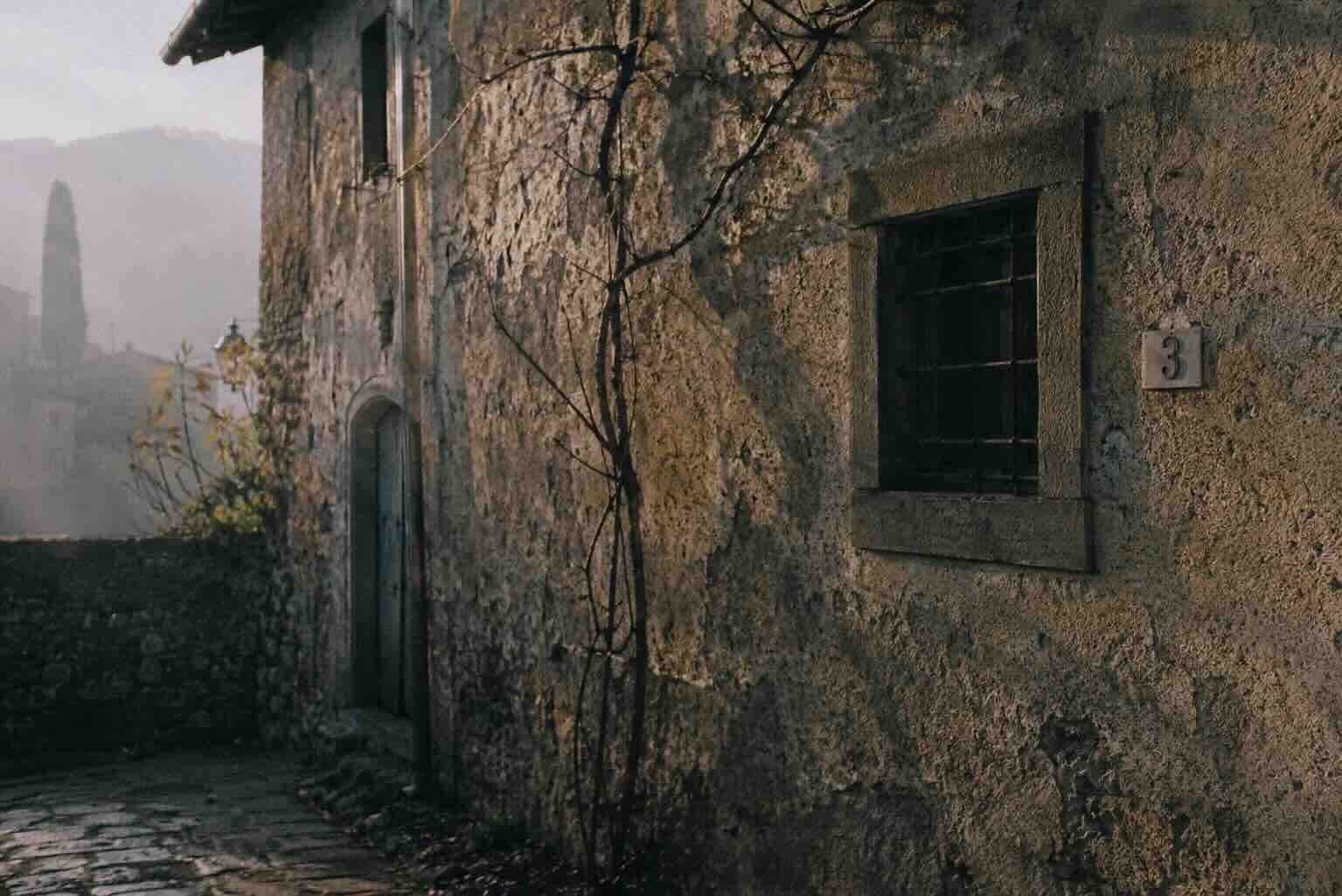
There's an hour, in the inland towns, when the November light falls slantwise across the stone walls and something you've never lived begins to be missing. It isn't a memory: there was nothing, before, to remember. It's an absence that comes before its own origin, a mourning with no one dead. The English-speaking world, which only lately felt the need to name it, calls it anemoia — a term coined by John Koenig in 2014, nostalgia for a time, a place, an era one has never known. From the Greek ánemos, wind, and nóos, mind: the wind that bends the tree without ever having touched the whole of it.
But go and look at where anemoia has actually taken root in the anglophone conversation, and you find something curious, almost comic in its narrowness. English-language anemoia lives almost entirely inside a single imaginary: the American shopping mall of the Eighties, the neon signage, vaporwave, synthwave, the future-pasts dreamed up in YouTube comments beneath the compilations. It's a nostalgia of backlit plastic, a melancholy of switched-off fluorescence. An ancient feeling has been kidnapped by a recent aesthetic and held captive in there, among the fake palms of a food court that no longer exists — or, more precisely, that never existed in that form at all.
This is the misunderstanding tuie. means to undo. Because nostalgia for what one hasn't lived was not born with late capitalism, nor with the first kick-drum out of a sampler. It is one of the oldest postures a human being has ever struck before time, and almost every culture that took the trouble to look at it gave it a name of its own — a name that English, and Italian alongside it, does not possess. Lining up those names is no glossary exercise: it's drawing the map of a feeling our language feels but cannot pronounce. And it is, for anyone who listens to the music of this site, the most exact way of saying what the music does.
We begin at the Atlantic, on the Portuguese shore, because there the word is almost a national institution. Saudade: a state of melancholic longing for someone or something loved and absent, a word descended from the Latin for solitude, which the Portuguese describe as the continual presence of an absence, the desire for the return of what is now lost. There's even a verb, matar as saudades, to kill the saudades — as if they were an animal living inside you, to be put down if you mean to outlive it. Saudade doesn't look back at a fact: it looks toward a fullness never possessed. This is precisely the string that vibrates in domestic recordings, in saturated tape, in all that music which seems to remember a home no one ever lived in. Fittingly, saudade migrates: there is a Japanese radio programme born for the Brazilian communities, where the Portuguese word sounds over Nippo-Latin voices — nostalgia transplanted, taking root in a soil that isn't its own. The same emotional ground that runs, among the records on this site, through the spectral Brazilian geography of Cajupitanga and their Ubá: an inland Brazil remembering itself from a distance it has never closed.
Then we turn east, and the feeling changes direction. In Japan mono no aware — literally the pathos of things — is not a longing for an elsewhere but a sensitivity to the ephemeral: a gentle, passing sadness before the fact that things pass, and a deeper, longer sadness before the fact that this passing is reality. It was born in the literature of the Heian period, and it is the lens through which the Genji monogatari was read for centuries. Note the reversal: saudade reaches out toward what's missing, mono no aware stays inside what's present and watches it vanish. The first is desire, the second is leave-taking. And yet the place where the two touch is the same place: the awareness that time does not come back. Anyone who has listened to Japanese acoustic folk, or to recordings where a voice dissolves into tape hiss, knows there's no nostalgia for an era there — there's the sad grace of a thing caught in the instant it's already leaving.
We go down further, to the subcontinent, where nostalgia is not merely a word but a codified musical structure. Viraha — biraha in Bhojpuri folk — is the song of separation from the beloved, the pain of distance made melody; a tradition that goes so far as to say a body that knows no separation is a living corpse. And there's more, something that ought to take the breath of anyone who writes about music: raga Marwa is a raga that carries longing and separation within it, and it is sung at the hour of dusk. Nostalgia, here, isn't a theme one chooses — it's inscribed in the hour of the day and in the scale of the notes, as though the feeling had its own appointed time and its own obligatory pitch. There's a record in this site's catalogue called Gloaming, twilight: India had already set that half-light inside a musical system a thousand years ago.
And finally China, where vicarious nostalgia is actually a literary genre with a name and two thousand years of history. Huaigu — meditation on the past — is the poetry in which the author contemplates the ruins of a vanished glory, one of the perennial themes of Chinese verse, beloved of Li Bai. Not a private, sudden emotion but a recognised, inherited form, repeated from dynasty to dynasty: the poet before the ruin he has never seen whole, mourning a greatness of which he owns only the rubble. It's anemoia turned into discipline, into craft, into tradition — the exact opposite of an advertising gimmick.
We could keep going north, where German keeps Sehnsucht, the intense desire for something you don't know the shape of and cannot explain, a kind of addiction to desire itself — longing reduced to its core, with not even an object left to lean on. But the point is clear by now. Each of these words lights a different face of the same stone: saudade the desire for return, mono no aware the grace of vanishing, viraha separation sung at a precise hour, huaigu the contemplated ruin, Sehnsucht desire without object. Five languages, five cuts of light, and none of them truly translatable into the others. Anglophone anemoia, set beside this, looks like a child who has just discovered something the world has always known — and discovered it, what's more, inside a shopping mall.
All of this to say one simple thing about why we write, here, the way we do. The false memory nostalgia tuie. has already written about — anemoia, the memory of what never happened — is not a recent invention that today's music brought to light. It's a feeling that medieval Japan, the Portugal of the discoveries, Tang China and the folk of northern India already knew, each in its own way, each with its own word. When a record from this world — a saturated tape, a harp in the silence, a voice that doesn't want to be heard — produces that absence which precedes its origin, it is doing nothing new. It's only remembering, in a language that belongs to everyone, something every culture had already named before us. And perhaps the only real task of the listener is to learn to listen in more than one language at a time.
tuie. nasce da un’idea condivisa tra amici, in un pomeriggio di primavera.
Contatti
info@tuie.it