Anemoia, Nostalgia for Unlived Memories
Anemoia, Nostalgia for Unlived Memories. A journey through vicarious nostalgia, memory psychology, VHS tapes, analog cinema and summers that never truly existed.
WRITINGS
A journey through the phantom summers that the internet, analog cinema, and emotional memory have quietly constructed within us.
It does not appear in clinical manuals, nor does it truly belong to traditional academic psychology. The term emerged at the margins of internet culture — within dictionaries of emotional neologisms and online communities obsessed with memory, analog aesthetics, and places that “feel strangely familiar.” And yet, despite its informal origins, it manages to name something deeply real: nostalgia for a time never personally lived.
Anemoia is not simply retro fascination. It is not just saying “I like the seventies.” It feels more ambiguous than that, almost physical. A sensation of loss without a clear object. As though memory could exist without biography. Certain nostalgic emotions do not emerge from lived recollection, but from cultural repetition. We encounter the same idealized past so many times that it slowly begins to feel autobiographical. Perhaps that is why certain photographs seem familiar even when we know they do not belong to us.
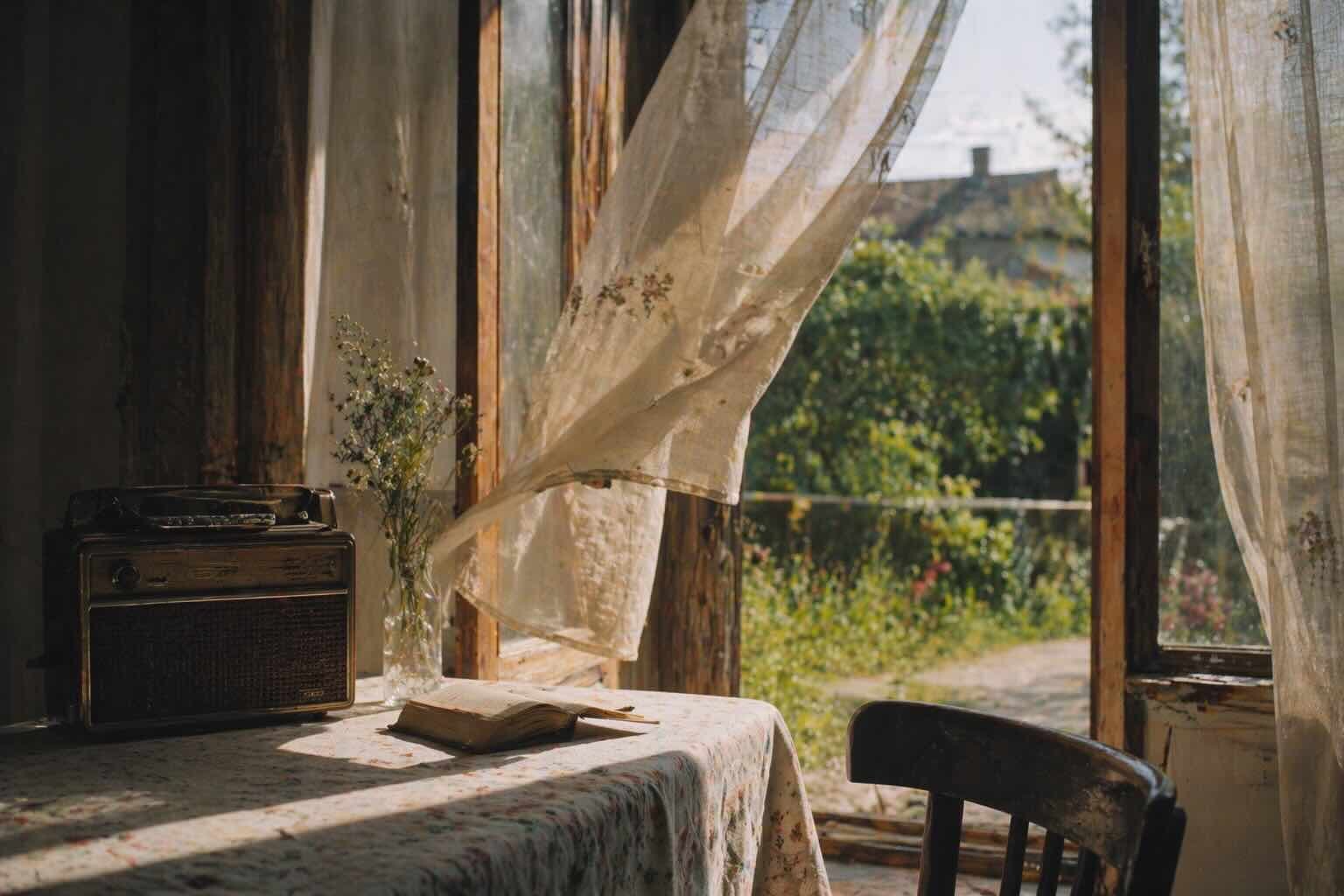
An unknown girl running through an English garden in 1976. An overexposed beach filmed on Super 8. A sunlit kitchen with a radio playing softly beside the hiss of magnetic tape. The mind does not process these images merely as documents; it treats them as atmospheres that might once have been lived.
Human memory is far more narrative than archival. It does not preserve the past like an intact videotape. It reconstructs continuously. It fills gaps. It blends lived experiences with cultural imagery, desires, fears, and stories inherited from others. In this sense, anemoia may resemble a form of synthetic memory — an emotional landscape assembled through repeated exposure.
Perhaps we do not truly remember those summers. We remember the collective idea of summer, and the internet has made that idea inescapable.
Tumblr, Pinterest, Instagram, digital archives, VHS uploads discovered on YouTube at three in the morning — over the past decade we have consumed enormous quantities of filtered pastness. Not the past itself, but a past already transformed into visual mythology. Washed-out colours. Degraded audio. Children playing in sun-bleached courtyards. Empty public swimming pools. Curtains moving in the wind. British educational documentaries. Folk music recorded onto cheap cassette tapes. The longer we look at these images, the more they begin settling inside us as indirect memories.
There is something almost hypnotic about the repetition of certain aesthetics. Psychologists have long understood that familiarity generates emotional attachment. An image seen hundreds of times eventually stops feeling external. It becomes part of our interior landscape.
Perhaps anemoia begins precisely there — at the point where visual culture stops being observed and starts being internalized.
Yet there is another layer to this, one that is more difficult to admit. Many people are not nostalgic for the past itself. They are nostalgic for a form of mental presence that feels increasingly absent from contemporary life. The imagined summers of the seventies and eighties appear emotionally denser because they seem slower, emptier, less optimized. No one was producing content. No one was documenting themselves continuously. Time still seemed capable of dissolving without guilt.
In this sense, anemoia also becomes a quiet form of resistance against the present.
There is another subtle element running through many experiences of anemoia: the longing for a pre-digital memory of the world. Before everything became photographed, archived, and automatically synchronized, the past possessed a more fragile quality. Images disappeared. Tapes demagnetized. Photographs faded slowly inside drawers. Even family memories carried something unstable and vulnerable within them. Perhaps part of contemporary nostalgia emerges from the disappearance of that fragility.
Today we produce immense quantities of digital memory, yet rarely experience it as emotional memory. Thousands of immaculate photographs survive indefinitely in cloud storage without ever becoming genuine recollections. Older analog images, by contrast, often feel nostalgic from the very moment they are created because deterioration already exists inside their material form.
Film ages. Digital remains motionless. And perhaps the human mind trusts things more deeply when they are capable of disappearing.
Some media theorists speak of the “texture of memory”: the idea that material formats profoundly shape the way we perceive the past. The hiss of a VHS tape, the click of a projector, the oxidized colours of a Polaroid are not merely aesthetic details. They become emotional signals of authenticity. As though deterioration itself made memory feel more human. This is why so many anemoic images appear to emerge from damaged or decaying media. We do not simply want to see the past — we want to feel that time has genuinely passed through it.
And it is here that anemoia begins to take on something almost spiritual.
We are not only longing for another era. We are longing for a world in which things could still dissolve slowly. A world where experience was not permanent, accessible, endlessly recoverable. A world where forgetting remained possible without guilt.
Perhaps these phantom summers continue haunting us because they represent the final imaginary form of time before everything became fully captured.
A time still capable of evaporating into afternoon heat without leaving definitive proof behind.
We idealize eras we never lived through because we imagine time moved differently there — more slowly, with greater space for boredom, mystery, absence. And perhaps the most unsettling detail is this: some of these images move us not because they seem true, but because they seem irretrievable. As though they belonged to some parallel dimension of existence. A life we might have lived. A countryside house that was never ours. An invented English childhood. An afternoon in 1974 surviving only through the grain of film and the golden light of worn photographs.
Perhaps anemoia is simply this:
the melancholy produced not by what we have lost, but by what we never truly had the chance to lose at all.
tuie. nasce da un’idea condivisa tra amici, in un pomeriggio di primavera.
Contatti
info@tuie.it