Review: Linda Perachs • Parallelograms
Linda Perachs • Parallelograms: the hidden California of the seventies — psychedelic folk, pastoral fragility, and cosmic openness in the remarkable rediscovery of a cult album.
Antonio Matellotta
4/28/20263 min read
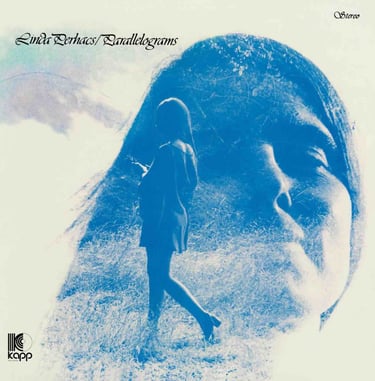
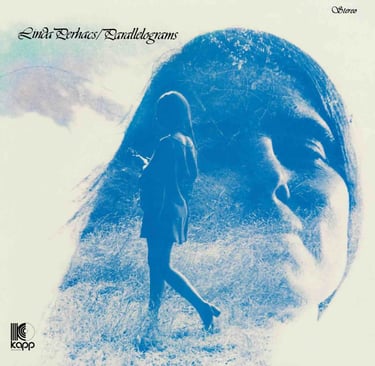
Linda Perhacs sings as though time were a place where nature and voice continue to brush against one another.
Deep within the hidden archive of American music, there are records that never truly belong to their own time. They remain obscured for years, almost invisible, as though the world had not yet developed the ears required to hear them. Parallelograms by Linda Perhacs is one of those records.
Released in 1970, amid the slow dissolution of the Californian hippie dream, Parallelograms now feels like a strange and elusive object: psychedelic folk, cosmic music, sonic meditation, natural song, and experimental textures coexist without ever hardening into manifesto. The album passed almost unnoticed at the time. Discouraged by the lack of support from Kapp Records, Perhacs eventually returned to her work as a dental hygienist in Beverly Hills.
And perhaps this is the first detail that truly matters: Linda Perhacs did not emerge from the Los Angeles music scene. She was never fully part of the Laurel Canyon orbit inhabited by Joni Mitchell or Crosby, Stills & Nash. She was working in a dental office when film composer Leonard Rosenman — already known for his Hollywood scores — heard a few home recordings and immediately recognized something rare within them.
The album emerged almost accidentally, like a temporary deviation from ordinary life. Perhaps that distance from the industry is exactly what gives it such unusual clarity.
Unlike much of the folk music released during that period, Parallelograms does not search for authenticity through simplicity. Instead, it constructs fluid and often disorienting sonic landscapes. Vocal harmonies evaporate into the air; reverberation transforms nature into a mental presence. Very little here feels fixed or stable.
“Chimacum Rain” is enough to establish the album’s entire world. Acoustic guitar intertwines with aqueous choirs and harmonic movements that seem to drift out of some rural West Coast dream. Even now, the track sounds startlingly modern. Its echoes can easily be heard in artists such as Julia Holter, Joanna Newsom, and much of today’s pastoral psychedelia.
“Dolphin” and “Call of the River” deepen this almost animistic relationship with landscape. Water, wind, animals, and light are not simply poetic images here, but sonic entities in themselves. In this sense, Parallelograms quietly anticipates much of contemporary ambient folk, along with certain ecological aesthetics that would emerge decades later. In an era shaped by hyperconnection and digital saturation, the record feels unexpectedly current precisely because it encourages a slower, more peripheral, almost contemplative form of listening.
The title track remains one of the most visionary moments in American psychedelic folk. Its structure gradually dissolves into spirals of echo, wordless voices, and suspended electronic textures. At a certain point, it no longer behaves like a song in the traditional sense. It becomes a mental environment. Psychedelia during those years was often associated with excess, theatricality, or chemical escape; here it takes on a quieter and more interior form. Perhacs herself repeatedly stated that psychedelic drugs held little interest for her. Her sense of expansion came instead through meditation, perception, and attentive listening to the natural world.
“Hey, Who Really Cares?”, written with contributions from jazz composer Oliver Nelson, may be the album’s most accessible moment, though it still carries the strange cosmic lightness that moves through the entire record. It feels like music drifting in from a radio station belonging to another dimension — familiar and alien at once.
Later tracks such as “Moons and Cattails” and “Morning Colors” reveal Perhacs at her most fragile and suspended. Here, folk music almost dissolves into atmosphere. Listening today, it becomes clear how deeply Parallelograms shaped — directly or indirectly — the aesthetic later associated with the so-called New Weird America movement, from Devendra Banhart to the more spiritual edges of experimental folk. Unsurprisingly, the album slowly resurfaced through reissues, collectors, and online communities, eventually becoming a genuine underground cult record.
There is something deeply moving about the fate of this album. After its initial failure, Linda Perhacs disappeared from music for more than forty years. Meanwhile, the record continued circulating quietly among collectors, electronic producers, and obsessive listeners. When the internet began reconstructing forgotten musical genealogies, Parallelogramsfinally reemerged as a lost classic.
Yet the album’s enduring power lies not simply in its rarity or cult aura. What continues to resonate is its ability to inhabit an in-between space: between song and environment, folk and abstraction, body and landscape. It never imposes itself. It remains at the edges, like a distant sound moving through the trees.
And perhaps that is precisely why it continues to return.
Artist: Linda Perachs
Album: Parallelograms 1970 (Kapp Records)
Duration: 43'
Tracklist: Chimacum Rain, Paper Mountain Man, Dolphin, Call of the River, Sandy Toes, Parallelograms, Hey Who Really Cares?, Moons and Cattails, Morning Colors, Porcelain Baked Cast Iron Wedding, Delicious
Close to: Vashti Bunyan • Just Another Diamond Day (1970), Judee Sill • Judee Sill (1971), Bridget St. John • Ask Me No Questions (1969), Sibylle Baier • Colour Green (registrato anni ’70), Grouper • Dragging a Dead Deer Up a Hill (2008), Joanna Newsom • Ys (2006)
Memory traces: nature, suspension, estrangement, uneasy calm
Essential tracks: Chimacum Rain, Dolphin, Call of the River, Parallelograms, Morning Colors
Critical line: The experimentation never disturbs the album’s delicacy. Even its strangest moments remain organic, gentle, almost biological.
tuie. nasce da un’idea condivisa tra amici, in un pomeriggio di primavera.
Contatti
info@tuie.it