An Ordinary Year: Edith Holden's Painted Diaries
Edith Holden's nature diaries: month by month, an Edwardian lady's watercolours and notes, the agrarian year and a nostalgia for a year she never knew she was losing.
WRITINGS
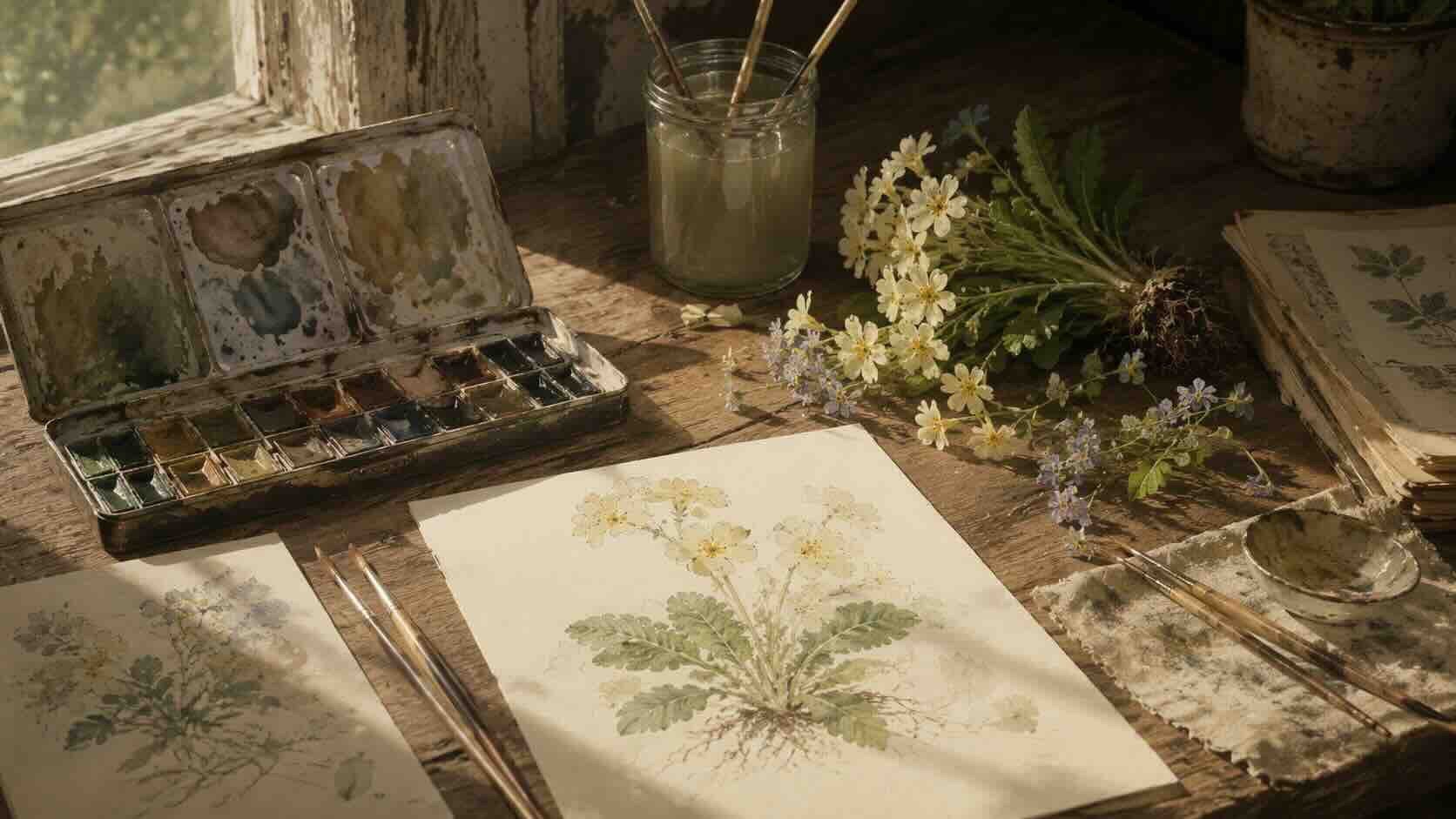
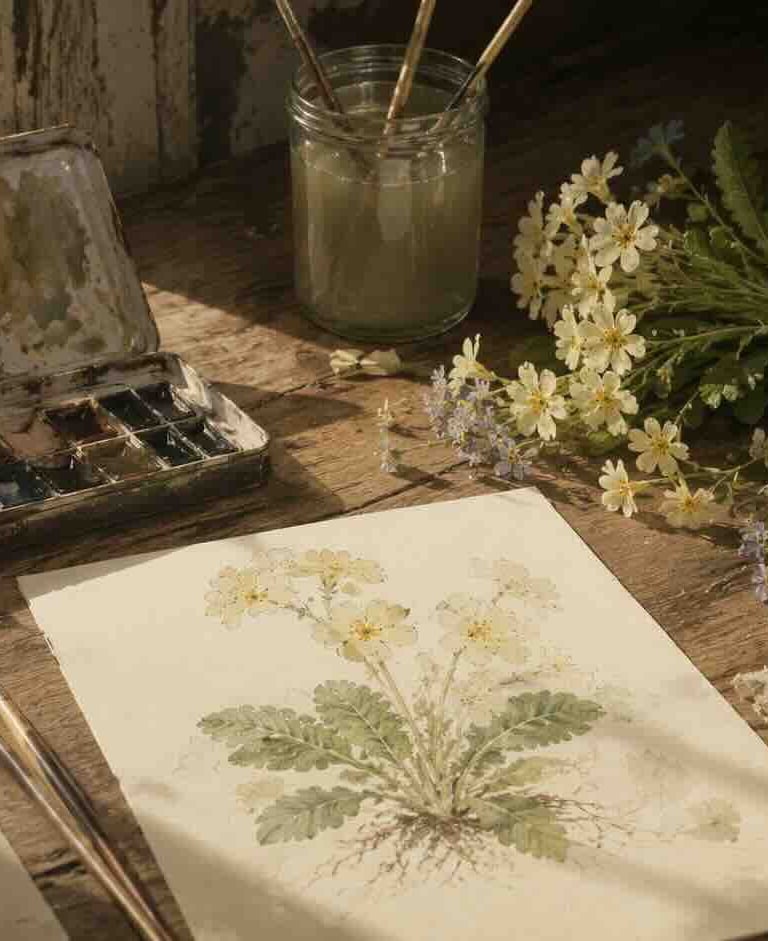
This all ties back to a feeling we've tried to fence in elsewhere: nostalgia for a time one hasn't lived, laid down by the one who looks and not the one who lived it, an emotional geography with no word of its own in our language. Holden is the laboratory case. There's no nostalgia in her pages, only present tense, a May of 1906 lived as May and nothing more. The nostalgia is entirely ours, it's the distance we put between that May and this one, and here's where it turns vertiginous: we feel longing for an ordinary year only because someone had the patience to paint it while it lasted. It wasn't a special year. It became one because someone looked at it well.
There's one sonic kin to this diary, and only one. From Gardens Where We Feel Secure by Virginia Astley records an English summer day hour by hour, from birdsong at dawn to the evening bell, almost wordless, with the same meteorological devotion and the same faith that the day is worth noting down because it exists. It's Holden's diary turned to sound, another way of saying that the light of any afternoon at all is important enough to keep. Anyone who knows that record already knows these pages, even having never seen them, and will find in the recordings of a garden at dusk the same thing set down in the Olton watercolours.
Holden died on 16 March 1920, at Kew, drowned in the Thames reaching for the buds of a chestnut. The detail has always been told as a perfect closure: the naturalist killed by nature, the circle drawn shut. To me it seems the opposite. It seems the last line of a diary that went on doing the exact same thing it always did, looking at a tree about to open, wanting to carry off its shape, and that death cuts off mid-gesture, granting it none of the dignity of an ending. There's no symbol here. There's a woman of forty-nine who wanted a close look at a March bud, as she'd seen a thousand, and who this time didn't make it back to the bank. The chestnut flowered anyway that year, without her.
The notebooks remain. And the truest thing to say about them isn't that they stop time. They don't, nothing does. They walk beside it a while, the way you walk someone to the gate knowing they go on alone from there. Open the diary to February and February arrives, every time, its snowdrops ready. It's enough.
In 1906 a woman in Warwickshire spent her days painting flowers and noting the weather, never knowing she was compiling a masterpiece. Edith Holden's two diaries, and the art of holding on to a year without picking it.
There's a day in March 1906, in an English county that didn't yet know it was the backdrop to anything, when a woman of thirty-five bends over a Warwickshire hedgerow to look more closely at a primrose. She doesn't pick it. She looks at it, draws it, writes the common name and the Latin one beside it, notes that the wind has swung round to the east. That's all. A gesture aspiring to nothing, commemorating nothing. A century on, it comes at us with the weight of a thing we were never owed.
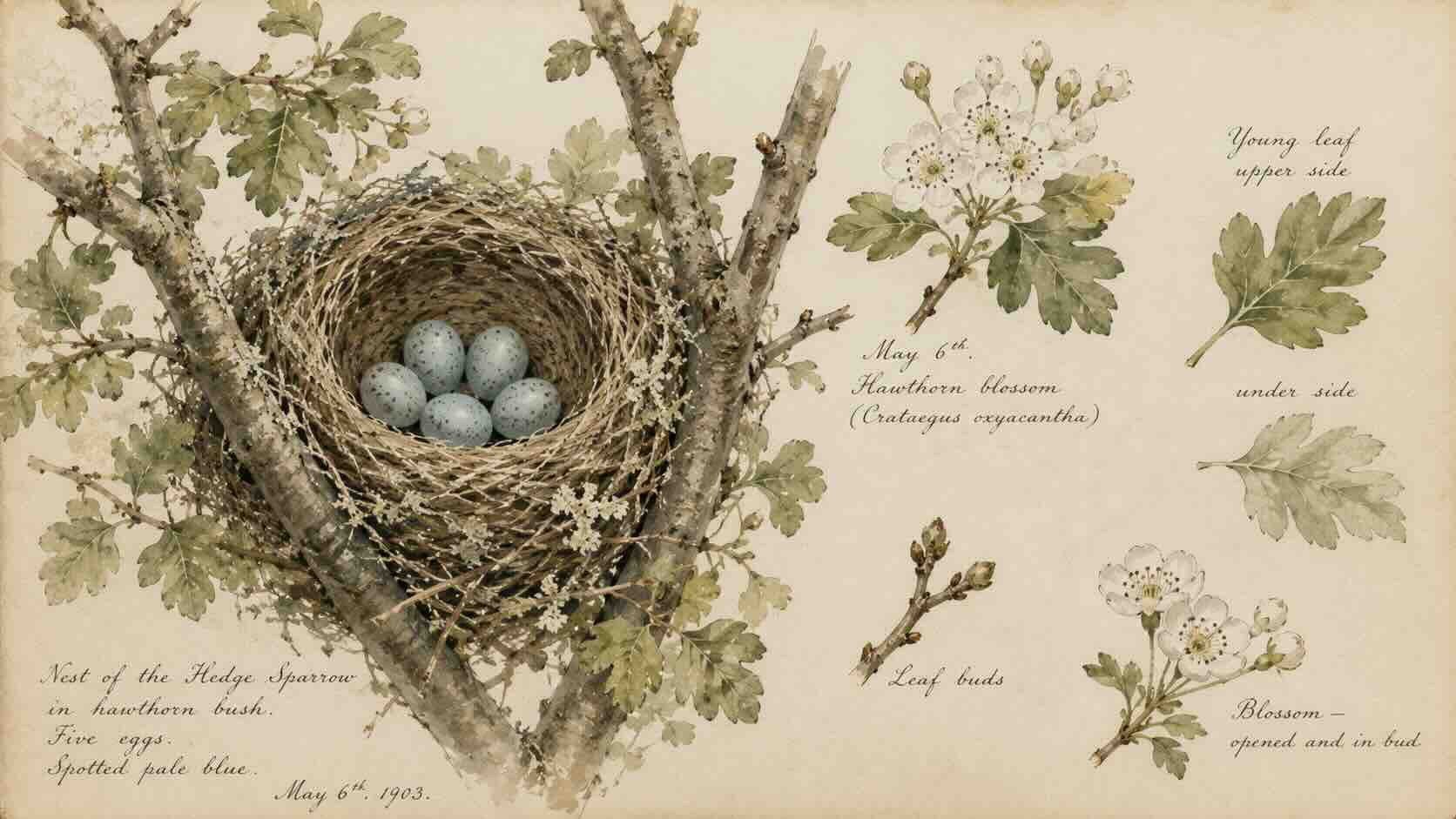
Edith Holden kept two of these diaries. The Nature Notes of 1905, rougher, recovered and printed only in 1989; and the Nature Notes for 1906, which the world came to know in 1977 under the title that made them famous, The Country Diary of an Edwardian Lady. Fifty-seven years of silence before anyone printed a page of it. The manuscript had stayed in the family, a private thing, a schoolbook turned devotion. Holden was a real illustrator: Birmingham School of Art at thirteen, a year at Craigmill in Scotland, children's books printed under her name. In 1906 she taught drawing and had her pupils keep nature diaries just like hers. The masterpiece begins as homework she set herself.
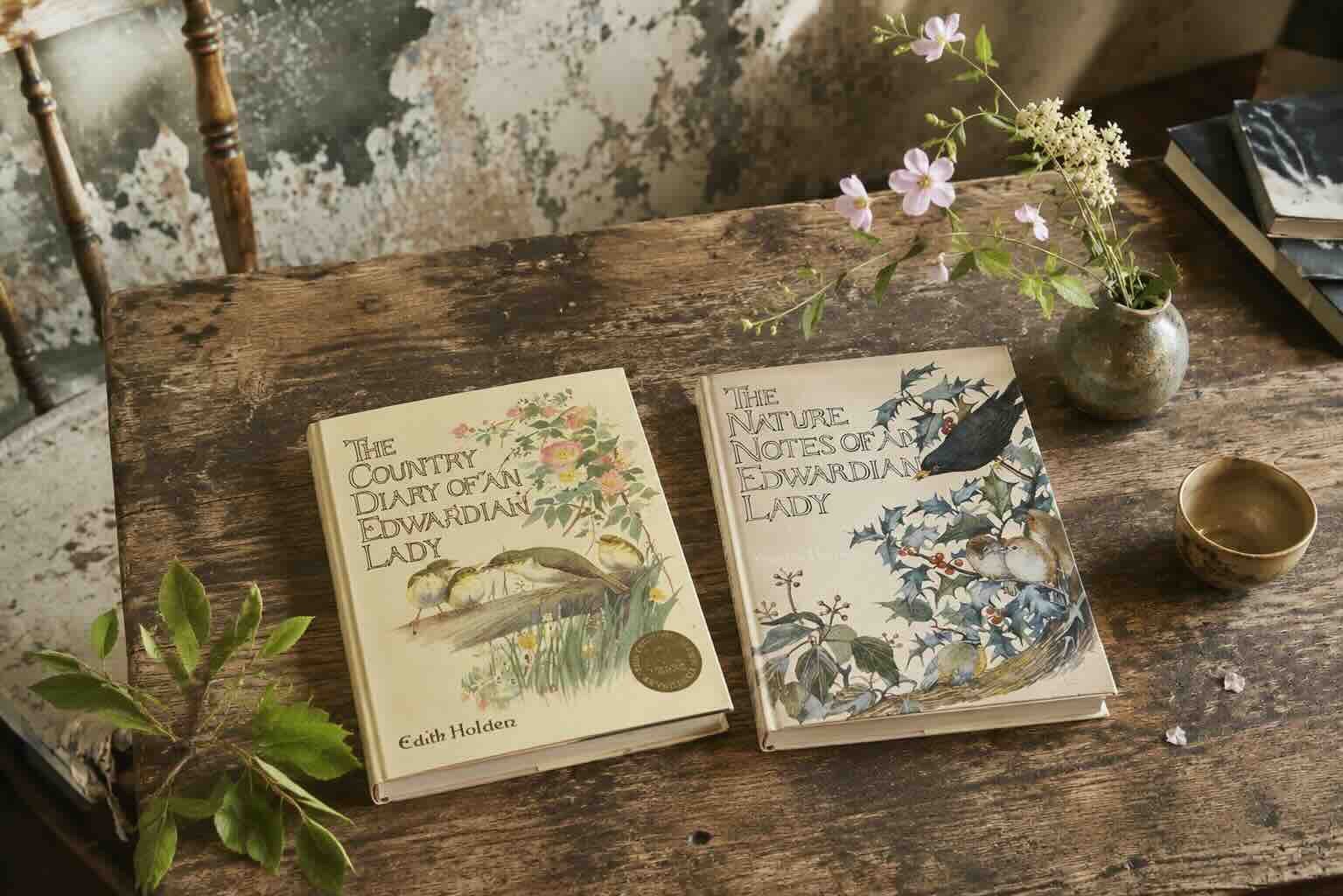
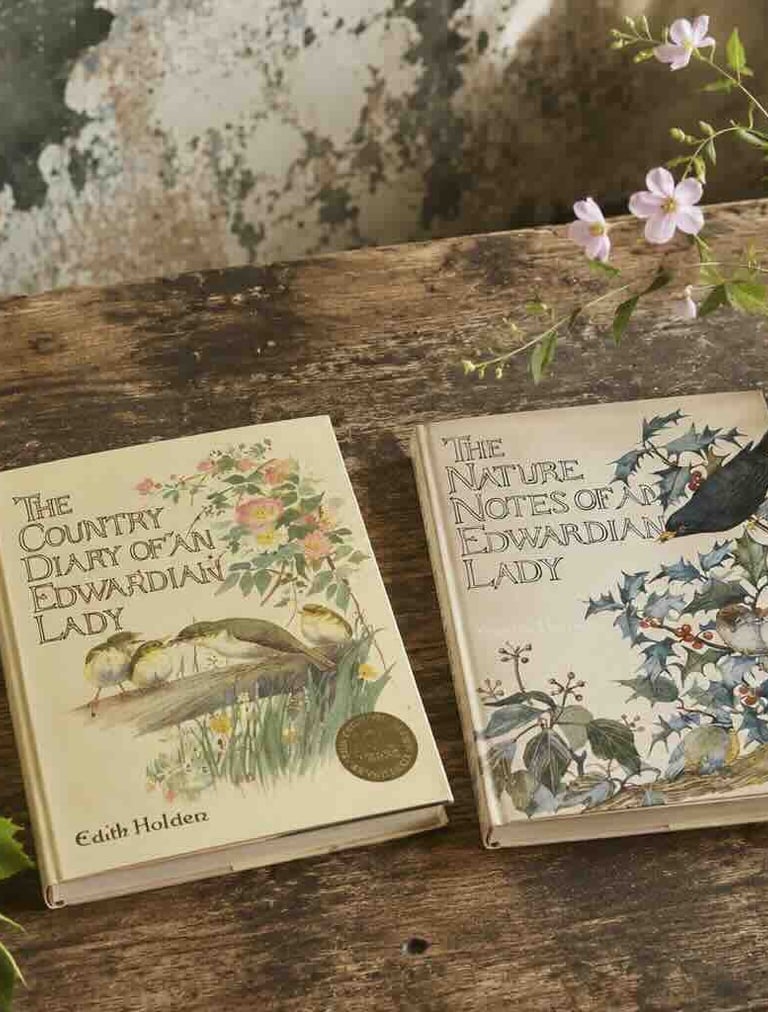
The temptation, faced with these pages, is to read them as you read an epitaph: backwards, knowing the end. But the pages know nothing, and that is their strength. Holden writes inside time, with the calm of someone who believes she has enough of it, and she did, at that moment, as much as anyone. The melancholy the reader pours into them is a posthumous addition, a sediment that settles only once the book is shut. On the page itself there is other business: a robin, the first violet, the feast-days of rural saints and the proverbs about weather to come, an ordinary year painted with the care usually kept for things that won't return. Only she didn't know that.
It's worth saying what these diaries actually are, because the word "diary" misleads. Not confession, not introspection. A vegetal horologium, a clock built from flowerings: the month measured not in days but in what opens. Snowdrop declaring February. Hawthorn signing off on May. Chestnut blossom marking a June already full. Holden doesn't describe the seasons, she counts them in pollen. It's the oldest calendar there is, the one that predates Rome and its month-names: the year read off the body of plants, the way Hesiod's farmers watched not the astronomical sky but the rising of the Pleiades to know when to reap and when to plough. Works and Days is the same book, in the end, a poem about what to do in which season, because the season asks it. Holden is its unwitting heir, in watercolour, with Tennyson copied out by hand alongside.
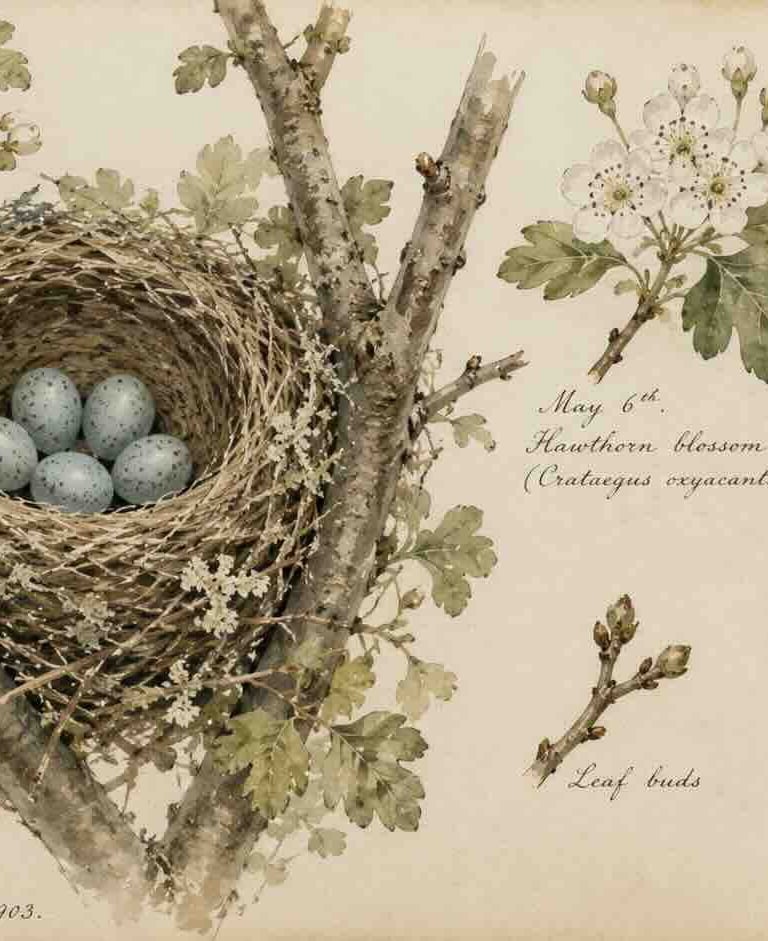
And the watercolours. Here you put the critical reflex aside and look. Precise as scientific plates, tender as ex voto. A woman painting a nest with five eggs isn't doing ornithology, she's making an act of presence, she's saying I was there when this was happening. The precision isn't cold. It's a form of exact love, the only way she had of keeping without owning. She didn't pick the flowers. She left them on the hedge and carried off the shape. There's a Greek word for this gesture that no modern language has: the care that watches without taking, that keeps a thing by leaving it where it is. Holden practised it without naming it.
tuie. nasce da un’idea condivisa tra amici, in un pomeriggio di primavera.
Contatti
info@tuie.it